
Can you believe the first week of August is gone already? I’m looking at my WIT Month TBR and it doesn’t seem to be getting any smaller. This is despite the fact I’ve read five books off it this week alone! But the beauty of WIT Month is that it can always be WIT Month if you want it to be. If I don’t get to all the books I want to read this month, I’ll just enjoy them next month instead.
People often ask me, especially on my wrap up posts, how I manage to read so much in a month. I don’t really have a satisfactory answer for them. The pandemic certainly hasn’t increased my workload, so I’ve definitely had more time to read lately. But even when I worked 9-5.30 in an office, I still averaged about 10-15 books a month. I thought I would organise this post as a sort of reading diary, so you can see how I read in almost ‘real time’!
But remember, everyone reads at their own pace. It depends on your job, your family life, so many factors. If I read YA I might finish the book in two hours. Dense literary fiction will take me longer. The important thing is that you enjoy whatever you’re reading.
So let me tell you what I read from Saturday 1st of August through to Friday the 7th!
Disclosure: titles with an asterisk* were gifted by the publisher in exchange for an honest review. I’m an affiliate for Blackwell’s, so this post contains affiliate links to their site. If you buy a book via my links, I’ll earn a small commission at no extra cost to you – thank you!
Saturday
I had big plans for the first Saturday of August… I wanted to kick off WIT Month with a bang and read a full book from my giant TBR! What did I do instead? I managed to read 100 pages of the book I carried over from July – not by a woman, and not even in translation! (It was Shuggie Bain by Douglas Stuart and it was actually excellent but that’s not for this post.) I also watched four episodes of the second season of The Umbrella Academy. A PRODUCTIVE SATURDAY.
Sunday
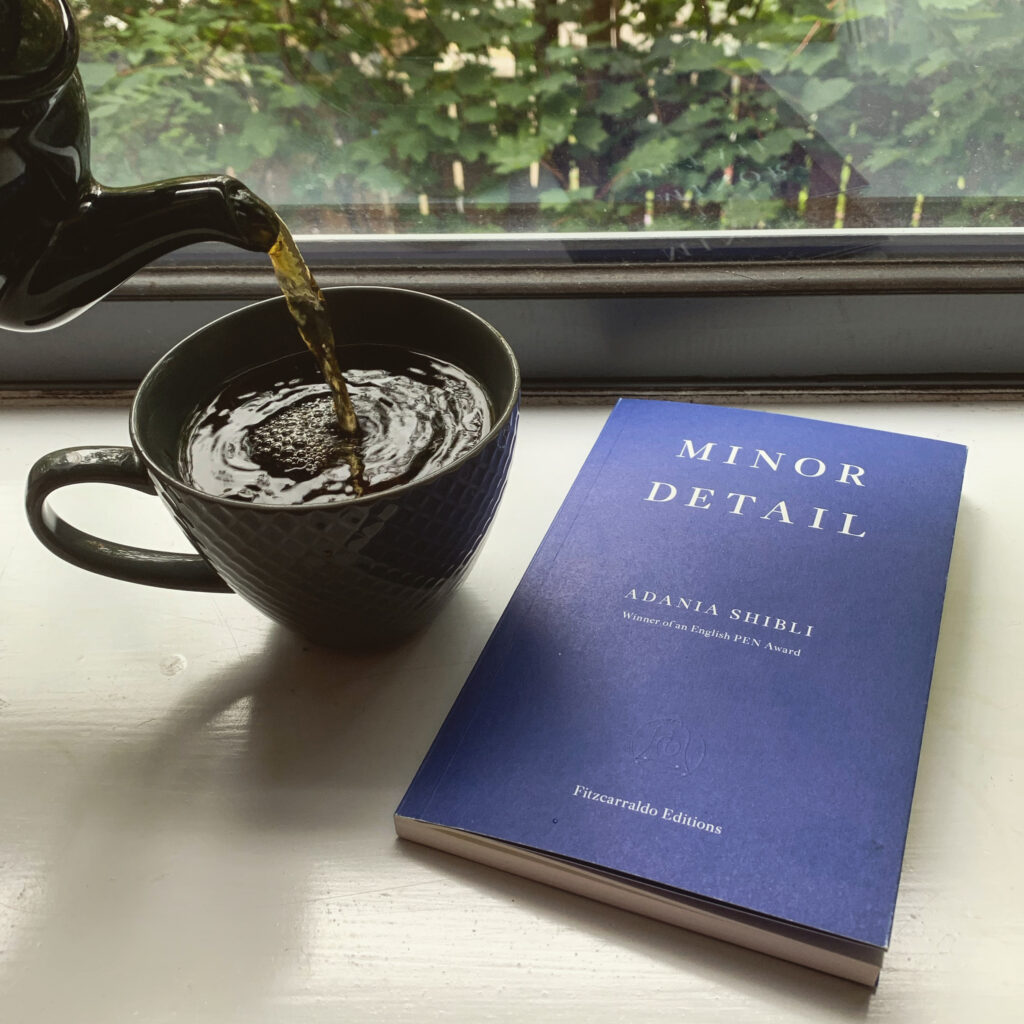
Thankfully I made up for it on Sunday. One day a week, either Saturday or Sunday, I take the day off Instagram. I don’t post, don’t check my DMs, don’t open the app at all. Not opening social media for a full day makes me feel like I have so many more hours of leisure time!
I STILL had not finished my book from July, so I sat down and read the last 50 pages of that with my breakfast. Then I watched another episode of The Umbrella Academy as a palate cleanser before finally diving into my first WIT Month book!
Around 9.30am (I wake up at 6am every day, even the weekends – dogs don’t care about the weekend), I started Minor Detail* by Adania Shibli, translated by Elisabeth Jaquette (112 pages). This is a slim yet powerful little novel. One half centres around the brutal rape of a young Bedouin woman at the hands of Israeli soldiers. The second follows a young Palestinian woman who becomes fixated by this previous ‘minor detail’ of history. I was also fixated. Shibli’s prose is hypnotic and I didn’t tear my eyes away until 1pm when I finished it and took Mia out for a bathroom break.
I then started Tender is the Flesh by Agustina Bazterrica (219 pages), translated by Sarah Moses around 1.30pm. But Sunday afternoons are made for napping, so then I went to bed for an hour! When I woke up, I continued reading, simultaneously engrossed and grossed out by this harrowing sci-fi/dystopian. It’s written in very short chapters so I found myself turning the pages compulsively. After tea (dinner to you non-Northern folk) I watched some more Netflix and then finished the book in bed.
Monday
Monday and the blissful bubble of Sunday has burst. But I’ve recently found my motivation for work again, so I wasn’t feeling too blue about the day ahead.Usually I have about an hour or so to read in the morning. I walk Mia at 6am and then shower and get dressed, ready by 7am to eat, have a cup of tea and read for 45 minutes to an hour before cracking on with work for the day.
I started Adua (200 pages) on Monday morning, a book by Italian Somali author Igiaba Scego, translated from the Italian by Jamie Richards. I’ve never read anything by a Somali author before, so this was one of my most anticipated reads of my WIT Month TBR! The start was very promising and I was sad to close it to start work.
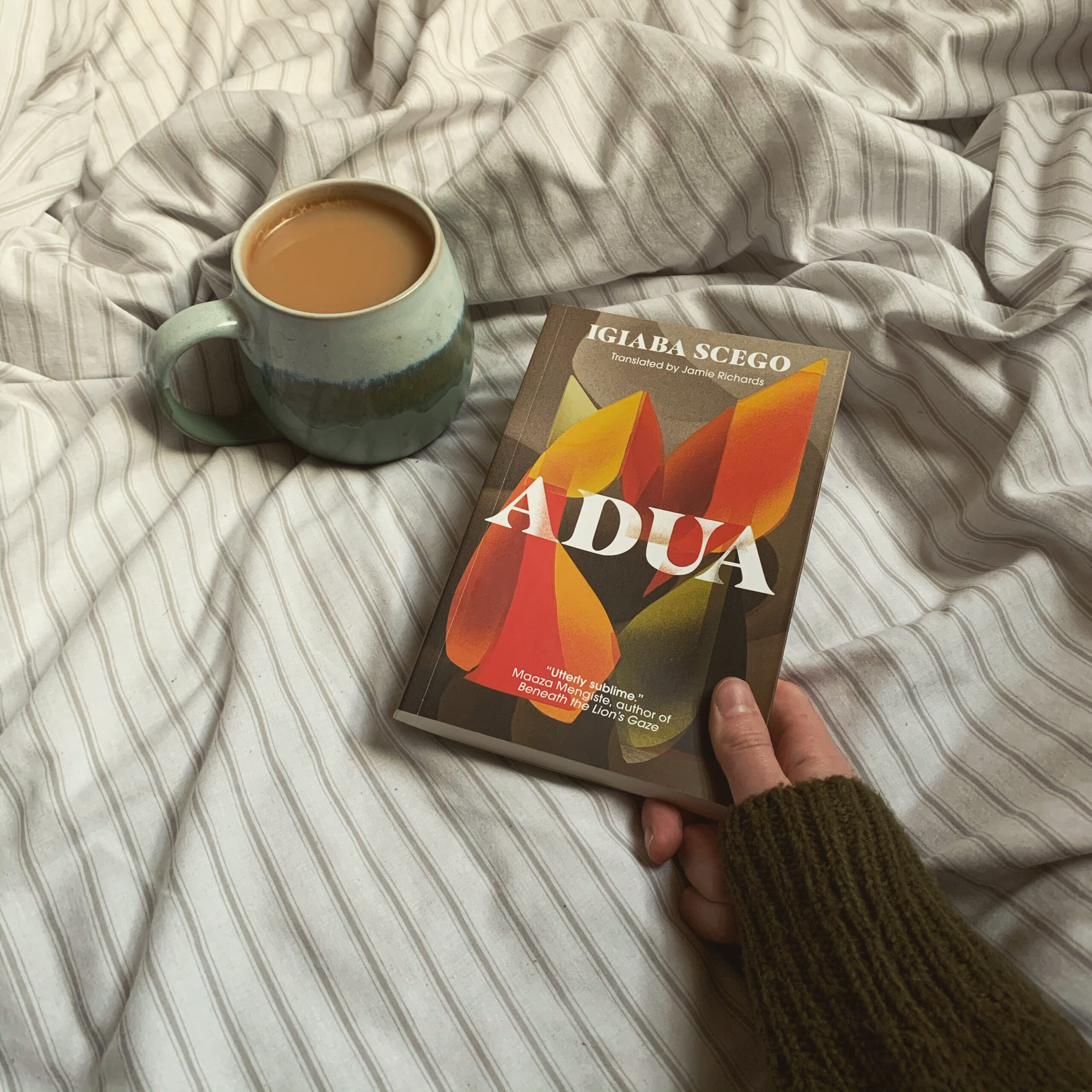
I read maybe 10 more pages during my lunch break. Then I finished working around 4.30, started making tea (dinner), ate, and walked Mia. I’m back home by around 6pm and then it’s time for a mammoth Instagram catch up, given that I have two days of posts to read! I finish up with my feed around 7.15pm, then reply to my own comments. I tend to spend on average 1.30-2 hours on Instagram a day, which is fine with me. Any more than 2 hours I don’t like. But it’s a huge part of my life and some of my work, so I’m happy to do it and I love seeing what everyone is reading!
I planned to only watch one episode of The Umbrella Academy on Monday night, but it was the penultimate one. I just HAD to keep watching to see how it all ended! So I only then managed to squeeze in another 30 or so pages of Adua before bed.
Tuesday
Tuesday was pretty run of the mill. I grabbed pages of Adua where I could. I found it was an easy book to pick up and put down without getting lost because of the dual narrative. One chapter would focus on Adua, a now elderly woman who immigrated from Somalia to Italy with dreams being a film star. Then it would switch to her father’s perspective, who first came to Italy before he was her father to work as a translator.
I haven’t read much about Italy as colonisers. Usually when you think of colonisers, you think America, the UK, Spain and maybe France. But from 1890-1941, Italy had colonies in Libya, Ethiopia, Eritrea and Somalia. So this book offered a very eye-opening perspective on that as well as the rise of fascism under Mussolini and the treatment of Black people in more modern-day Italy too.
I finished up Adua after our evening dog walk and before I caught up on Instagram for the day. While I was doing that, I found out about FitzCarraldo and Charco Press’ IG Live with the translators of Minor Detail and Dead Girls* by Selva Almada coming up on Friday. That settled my next read for me! Charco had kindly gifted me an early copy of Almada’s book after I enjoyed The Wind That Lays Waste* in January.
Dead Girls (146 pages), translated by Annie McDermott, is journalistic fiction. Almada draws much-needed attention to femicides in Argentina through three unsolved cases from the 80s. I devoured 70 pages of it before bed.
Wednesday
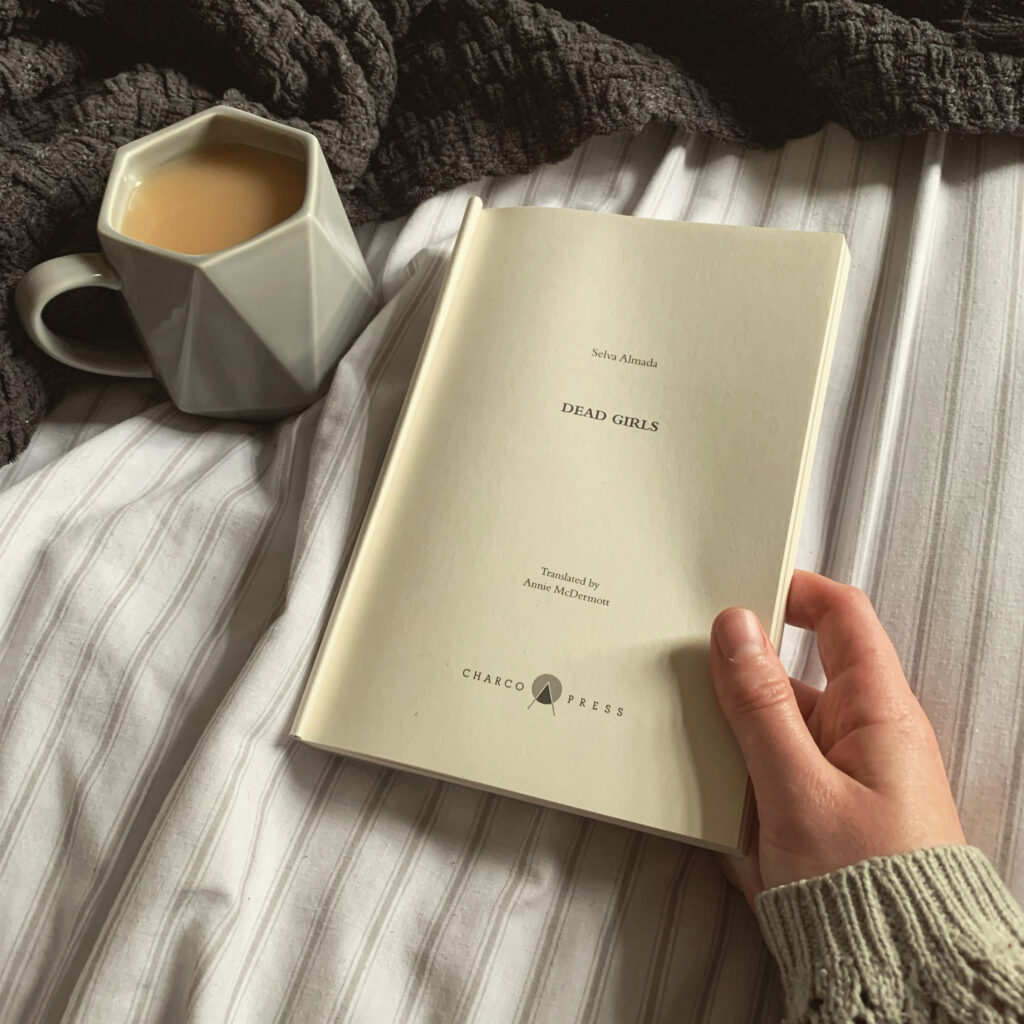
All I could think about while working through my to-do list on Wednesday was Dead Girls. I couldn’t wait to eat tea, walk Mia and go through my feed so I could get back to it! It was utterly harrowing to read, especially as Almada was writing about real women who were murdered simply for being women. Almada delves into issues like class divides and domestic abuse to try to get to grips with these cases.
There was one moment that really struck me. The remains of one girl had been found, but before DNA testing was available. Her family simply assumed they were her bones. But once they could get them tested, they did, and it was revealed the bones were not actually Sarita’s. Not only did the family now not know what happened to Sarita for sure, the bones of another dead girl had gone years buried under Sarita’s name. Was anyone looking for her?
I hope this book will be widely read. It’s upsetting and very difficult to read at times, especially given the stark, journalistic tone with which Almada discusses bodies and injuries. But this issue hasn’t gone away since the 80s, and Almada’s work here is essential reading. A late addition to my WIT Month TBR, but likely one of the highlights of the month.
Thursday
I didn’t read at all until around 7pm on Thursday, as I had work to finish in the morning and then we spent some (socially distanced) time with Adam’s parents in the afternoon. But in the evening I reached for the short story collection Revenge by Yōko Ogawa (162 pages), translated by Stephen Snyder.
I’d been looking forward to trying more of Ogawa’s work since I read The Memory Police back in January. That book transfixed me, and the same can be said for this sinister set of short stories. Every story is linked in some way. Ogawa had me looking like that meme of Charlie from It’s Always Sunny in Philadelphia trying to nail down the connections. I sat down and read the first eight of eleven stories, before my eyelids were drooping too much to continue.
Friday
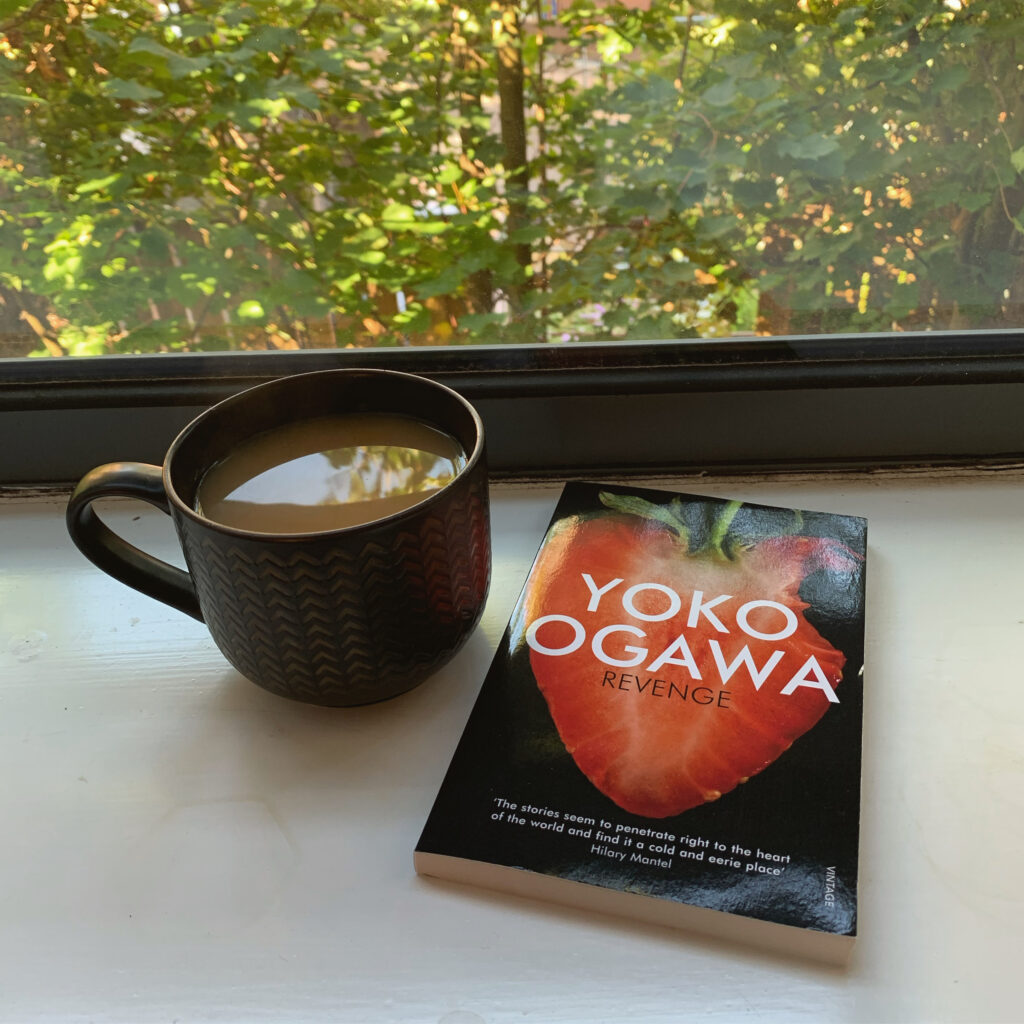
After walking Mia, the last three stories in Revenge were calling to me. The first one I read on Friday morning actually wasn’t as intriguing as some of the others. Ogawa really ramps it up with final two though! I felt like going back to the beginning and reading them all through again with the connections fresh in my mind, to spot the things I missed the first time.
I’m now tempted to buy more of Ogawa’s work and add it to my WIT Month TBR but alas, I must be sensible. I still have nine books sitting next to my armchair that I want to read before the month is out. Including Segu by Maryse Condé, translated by Barbara Bray! I love getting lost in a big book at the weekend, so I’ve saved this one until now.
***
Let me know if you enjoyed this style of post and would like to see more of my reading routines! I think I’ll keep it going at least for WIT Month. So apologies if you’re not a fan, you’ll see a few more!
Hi, Abbie!
I really liked this post.
I’m struggling to read at the moment and don’t know how to combine studying and reading. My brain breaks down after so many words.
Your post is very insightful. I always wonder how bookstagrammers read so much. I understand that you spend all your free time reading, or most of it.
I look forward to more weekly posts for WIT.
Xx
Thank you, so glad you enjoyed it! I was the same when I was at uni, I didn’t read a non-academic book during my first two years. I took a year out as I was struggling and that was when I started reading for pleasure again! Then when I returned I gave myself strict limits when it came to uni work, I wouldn’t work past a certain time and made sure I made time to read.
But yep, nowadays if I’m not working, sleeping, walking my dog, eating or spending time with my partner, I am reading 😀
I really like seeing your reading schedule. It seems to me though that the key difference between us and the reason for which you end up reading more each month is that you read faster, and not necessarily that you devote more time to reading. That saddens me a bit because there is not much I can do about that. But I’m happy for you that you can read so fast and get to enjoy many many books! I would still love to see more of these kinds of posts. They motivate me to read even in the smallest bits of free time!
I’m glad you enjoyed the post. I am a fast reader, yes, but I also do devote a lot of time to reading. That’s my main activity most weekday evenings and weekends, so I wouldn’t say I don’t spend a lot of time reading! But please don’t feel sad, we all read at our own pace and as long as we enjoy what we’re reading that’s the main thing!
Hi Abbie!
Really enjoyed reading this weekly wrap up- gives a glimpse into how you manage to read so much every month! Would love to see more similar reading routine wrap ups from you 🙂
Especially as a uni student, I’m finding it tricky to get in as much reading as I would like, so any tips would be helpful xx
Hi Shadha,
I’m so glad you enjoyed reading this post! I have thought about doing a reading tips post, but I always think they’re so subjective – what works for one person may not work for another! But I will see what I can pull together. 🙂 For now, when I was in my third year of uni I structured my day and stuck to that schedule strictly! I didn’t read at all during my first two years and it was awful. In third year, I would start working at 7.30am (I’m an early bird!) and wouldn’t do any work past 5.30pm, that time was for reading only! x
This was very interesting and enjoyable to read, Abbie – I would definitely love to see more posts like this! I think it’s just because I’m nosey and it’s fascinating to see how people spend their days and how they fit reading and other hobbies into their schedule. ?
I’m not usually much of a morning reader, although I’ve been doing it here and there now I work from home. When I used to commute, all I could think about was preparing for going into the office, so I was never really in the right mindset for reading!
Thank you, Steph! I’m really nosey too, I love these kinds of posts from other people. I actually used to read a lot more in the mornings when I worked in an office! As I knew I started at 9, I’d read for 45 mins at home and then on the train as well. Now I work from home, I get a bit antsy to get started a lot of mornings! Trying to carve out some more time for it though. 🙂